
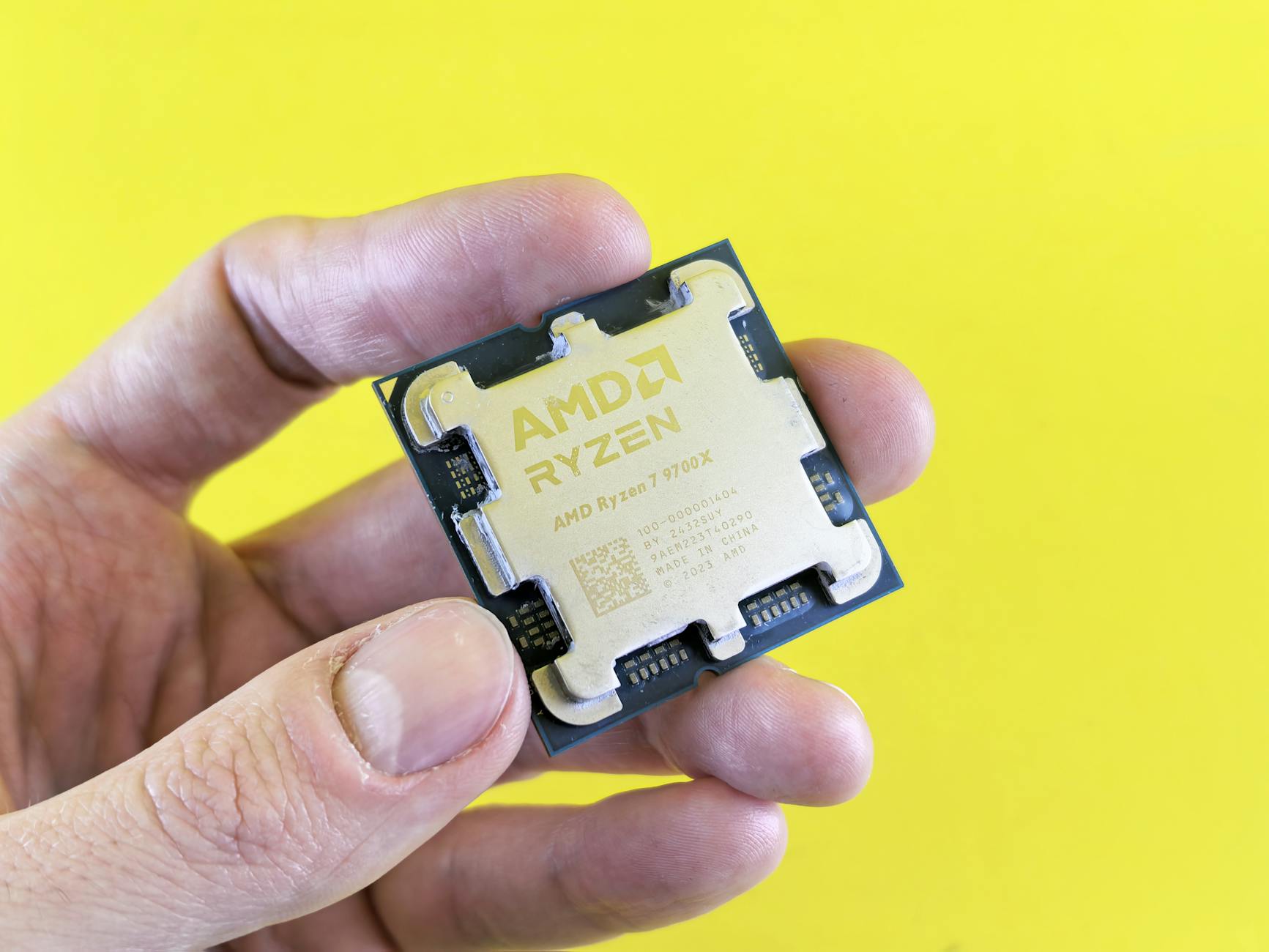
The Hidden Performance Cliff
On February 12, 2026, Anthropic’s engineering blog quietly published a post that should have rattled every AI investor: their new Claude 4 model achieves only 32% utilization on H200 GPUs during inference. Translation: $32,000 GPUs are sitting idle 68% of the time, waiting for data. This isn’t an Anthropic problem—it’s a physics problem that’s reshaping the entire AI stack.
The root cause: memory bandwidth wall. Modern transformers with 500B-1.5T parameters require moving weights from HBM (high-bandwidth memory) to compute cores for every token generated. Nvidia’s H200 delivers 4.8TB/s memory bandwidth but 989 TFLOPS compute—a 200:1 imbalance. The GPU can calculate 200x faster than it can fetch the numbers it needs to calculate with.
Why This Matters Now
The scaling paradigm is breaking. OpenAI’s GPT-5 (rumored at 1.7T parameters) and Google’s Gemini 2.0 Ultra (estimated 1.3T) both face the same constraint. Sam Altman’s January interview hinted at this: “The path to GPT-6 looks different than 3→4→5.” Industry insiders understand this as code for “we’ve hit the memory wall.”
Real-world impact: Perplexity reported their average query latency increased 47% between October 2025 and January 2026 despite upgrading from H100s to H200s. Why? Their model grew from 70B to 405B parameters. More parameters = more memory transfers = slower inference, even on “better” chips.
The Historical Echo
This exact pattern played out in CPU design 2003-2006. Intel’s Pentium 4 pushed clock speeds to 3.8GHz, but performance gains flatlined because memory couldn’t feed the cores fast enough. The solution wasn’t faster CPUs—it was multi-core architectures and cache hierarchies that reduced memory pressure.
AI is hitting the same wall, just 20 years later and at $100B scale.
Cross-Domain Ripple Effects
Semiconductor Economics: SK Hynix and Samsung dominate HBM3E production, creating a duopoly. HBM3E costs $800-1,200 per GPU versus $150 for GDDR6. Micron’s upcoming HBM4 (claimed 1.5TB/s per stack) won’t ship until Q3 2026. This supply constraint is why Google’s TPU v6 waitlist is 8 months long.
Venture Capital: A16z’s January deck explicitly calls out “memory-adjacent infrastructure” as a priority area. Startups like Groq (inference chips with 80TB/s on-chip bandwidth) and Cerebras (wafer-scale processors eliminating off-chip memory) raised $640M combined in Q4 2025. Groq’s LPU inference chips achieve 18x lower latency than H100s on Llama-405B specifically because they keep weights on-chip.
Cloud Economics: AWS’s new inf3 instances (powered by Trainium 2) are priced 40% below comparable Nvidia instances but only for models <100B parameters. Why the size limit? Memory bandwidth. This creates a bifurcated market: small models commoditize, large models stay expensive.
Defense & National Security: The CHIPS Act’s $52B focused on fabrication, not advanced packaging (where HBM integration happens). Meanwhile, China’s CXMT is developing HBM2E equivalents. Memory bandwidth could be the real semiconductor choke point, not lithography.
The Three Solutions Emerging
1. Architectural Workarounds (2026-2027)
- Mixture-of-Experts (MoE): Mistral’s 8x22B and DeepSeek-V2.5 activate only 15-20% of parameters per token, slashing memory transfers by 80%. Expect every foundation model to be MoE by end of 2026.
- Speculative Decoding: Google’s research shows drafting tokens with a tiny 1B model, then verifying with the full model, cuts memory reads by 60% with minimal quality loss.
- Quantization: Meta’s 1.58-bit quantization (published Feb 2026) reduces memory bandwidth by 10x. Catch: requires custom kernels and 5-8% quality degradation on reasoning tasks.
2. Memory Innovation (2027-2028)
- Processing-in-Memory (PIM): Samsung’s HBM-PIM and UPMEM’s chips perform computations inside memory modules, eliminating transfers. Samsung claims 2.5x speedup on transformer inference. First cloud deployments expected Q1 2027.
- CXL (Compute Express Link): Intel’s CXL 3.0 spec allows pooling memory across GPUs at 128GB/s per link. Microsoft’s Azure Maia chips use CXL to share 1.5TB memory pool across 64 GPUs—critical for 1T+ models.
3. Algorithmic Breakthroughs (2026-2030)
- State Space Models: Mamba and StripedHyena architectures have linear memory scaling versus quadratic for transformers. Still 20-30% behind on quality, but DeepMind’s recent Mamba-Llama hybrid narrows the gap.
- Dynamic Sparsity: MIT’s March 2026 paper shows 90% of attention heads can be pruned dynamically with <2% quality loss. Reduces effective parameters by 3-5x during inference.
Forward Implications
Q2-Q3 2026: Expect 2-3 major model releases explicitly marketed as “memory-optimized.” Anthropic’s Claude 4 variants will likely include a “Lite” version using aggressive MoE to slash inference costs by 70%.
2027: The first sub-$10K “inference-optimized” accelerator ships, purpose-built with 200TB/s+ memory bandwidth and only 100 TFLOPS compute. Market size: $15-20B by 2028 (Precedence Research).
2028-2030: The industry bifurcates into “training clusters” (compute-bound, Nvidia’s stronghold) and “inference farms” (memory-bound, won by Groq/Cerebras/new entrants). AWS, Google, and Microsoft all design custom inference silicon—not to compete on performance, but to escape the memory bottleneck tax.
The Investable Thesis
Follow the memory, not the FLOPS:
- HBM suppliers (SK Hynix +87% YoY, Samsung Memory division)
- PIM startups (UPMEM raised €47M Series C, Feb 2026)
- Inference specialists (Groq at $1.1B valuation, Cerebras rumored IPO Q3 2026)
- Quantization tooling (Neural Magic acquired by Red Hat for $285M, indicator of enterprise demand)
The $200B being invested in AI compute is chasing yesterday’s bottleneck. Memory bandwidth is today’s—and likely tomorrow’s—constraint.
Key Takeaway
The AI boom’s next trillion dollars won’t be won by whoever trains the biggest model. It will be captured by whoever solves the memory bandwidth problem first—whether through new chip architectures, algorithmic shortcuts, or entirely novel computing paradigms. When your $32,000 GPU spends 68% of its time idle waiting for memory, the winning move isn’t buying more GPUs. It’s rethinking the whole stack.
Key Takeaway: The AI industry’s $200B chip investment is solving the wrong problem. As models hit 1T+ parameters, memory bandwidth—not FLOPS—has become the critical constraint. The companies building HBM alternatives and algorithmic workarounds will capture more value than those chasing bigger clusters.
Deep research published daily on AtlasSignal. Follow @AtlasSignalDesk for more.
📧 Get Daily AI & Macro Intelligence
Stay ahead of market-moving news, emerging tech, and global shifts.