The Surface Story vs. The System Shift
When the National Conference expelled Feroz Ahmad Akhoon on July 17, 2026, for refusing to vacate his role as Chief Executive Councillor of the Kargil Hill Council, most coverage framed it as routine political theater — a local leader defying party orders. But zoom out, and you see something more consequential: India is conducting a live experiment in creating hybrid governance structures for its most geopolitically sensitive regions, and Ladakh is the petri dish.
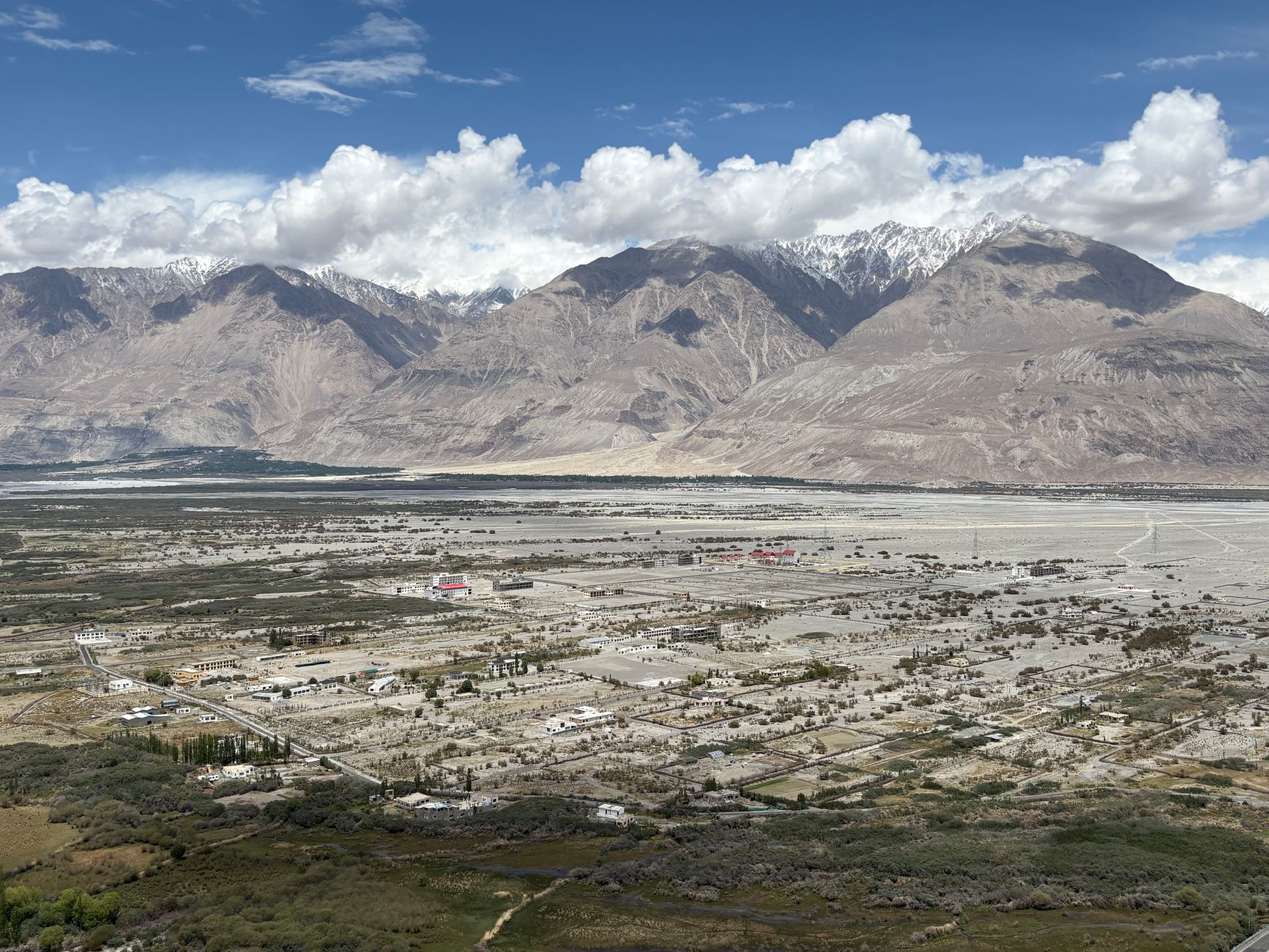
Since Ladakh became a Union Territory in August 2019 (carved out of Jammu & Kashmir), it’s operated under a unique constitutional arrangement: directly governed by the central government through a Lieutenant Governor, yet with two elected Autonomous Hill Development Councils (Leh and Kargil) holding powers over local development, healthcare, and education. The Akhoon standoff exposes the inherent tension in this model — and why getting it right matters far beyond one mountain territory.
Why Ladakh Became the Testing Ground
Three factors make Ladakh the perfect laboratory for India’s decentralization experiments:
Strategic Location: Sharing borders with China and Pakistan, Ladakh sits at the intersection of three nuclear powers. The 2020 Galwan Valley clash killed 20 Indian soldiers and fundamentally shifted how Delhi views Ladakh — not just as a territory to govern, but as a strategic asset requiring both local legitimacy and central control.
Demographic Complexity: Kargil district is 77% Muslim (predominantly Shia), while Leh is 66% Buddhist. Any governance model must balance religious identity, cultural autonomy, and national security — a microcosm of challenges India faces in the Northeast, Kashmir, and potential future scenarios if Jammu & Kashmir’s statehood is restored with new provisions.
Constitutional Clean Slate: Unlike states with entrenched bureaucracies and political machines, Ladakh’s UT status (just under 7 years old as of July 2026) allows for institutional experimentation. The Hill Councils predate the UT — established in 1995 and 2003 — creating a ready-made structure for layered governance that Delhi is now stress-testing.
The Hidden Innovation: Vertical Power-Sharing
The Akhoon case illuminates how this works in practice. As CEC of Kargil Hill Council, Akhoon wields significant local authority — roughly $85 million in annual development budgets, control over 450+ local staff positions, and decision-making on everything from road construction to school curricula. But he also serves as a National Conference legislator in the Ladakh Autonomous Hill Development Council elections.
Here’s where it gets interesting: The Hill Councils operate semi-independently from both the UT administration AND from political parties. When NC ordered Akhoon to resign (likely to install a more pliable CEC ahead of upcoming council elections), they triggered a constitutional question: Can a political party compel an elected council head to step down from a position that, technically, derives authority from a separate electoral mandate?
This isn’t just procedural minutiae. It’s testing whether India can create genuinely autonomous local governance bodies that aren’t simply extensions of state or national party machines — a model that, if successful, could be exported to other sensitive regions.
Cross-Domain Implications: Defense, Development, and Data
1. Defense Infrastructure Acceleration (2026-2028)
The central government has earmarked ₹12,000 crore ($1.4 billion) for Ladakh infrastructure through 2028, primarily roads and telecommunications to support military positioning along the LAC (Line of Actual Control). But here’s the catch: execution requires Hill Council cooperation for land acquisition, environmental clearances, and local labor coordination.
The opportunity: A functioning hybrid model where Delhi controls strategy but Hill Councils manage implementation could cut project timelines by 30-40% compared to fully centralized execution. The Indian Army has already partnered with Kargil Hill Council on 14 dual-use road projects since 2024 — civilian highways that double as military logistics routes. Akhoon’s refusal to step down actually demonstrates the councils’ institutional strength — they’re not rubber stamps.
2. Renewable Energy Frontier (2027-2030)
Ladakh receives 300+ sunny days annually and hosts India’s first solar-powered town (Leh, since 2024). The UT aims for 2.5 GW of solar capacity by 2030 — enough to power 1.8 million homes and export electricity to northern India.
The governance innovation: Hill Councils are negotiating directly with NTPC and private developers, securing 12% revenue sharing on solar projects — unheard of for local bodies in most Indian states. This decentralized energy federalism creates a template for tribal regions in Chhattisgarh, Jharkhand, and the Northeast that sit on massive renewable potential but lack bargaining power with state governments.
Specific near-term catalyst: The Kargil Solar Park tender (850 MW) is expected August 2026. Whichever CEC is in place will negotiate terms that could mean ₹140-180 crore in annual revenue for Kargil district — a 25% boost to the Hill Council budget.
3. Tourism and Cultural Preservation (2026 onward)
Ladakh saw 380,000 tourists in 2025, up from 280,000 in 2023. The Hill Councils control tourism permits, environmental regulations, and cultural heritage protection — real power that most district-level bodies in India don’t possess.
The balancing act: Kargil Hill Council under Akhoon has pushed for “sustainable volume caps” — limiting annual tourist entries to 200,000 for Kargil district to prevent ecological degradation. This directly conflicts with the UT administration’s push for 500,000+ annual visitors to boost revenue. Who wins this tug-of-war will determine whether Ladakh becomes Shimla (overdeveloped, infrastructure collapsing) or Bhutan (controlled growth, premium positioning).
The Statehood Question: Timeline and Scenarios
Since 2019, both Leh and Kargil have demanded full statehood with Sixth Schedule protections (autonomy provisions for tribal areas). The central government has been non-committal, but three scenarios are emerging:
Scenario A (60% probability, 2027-2028): Ladakh remains a UT but Hill Councils get expanded financial powers — direct tax collection authority, ability to issue municipal bonds, and veto rights on land transfers above 100 acres. This is the “enhanced hybrid model.”
Scenario B (30% probability, 2029-2030): Full statehood with Sixth Schedule, similar to Northeast states. Requires constitutional amendment and political will in Delhi — unlikely before 2029 general elections.
Scenario C (10% probability): Status quo continues, central control tightens. Hill Councils become ceremonial. This would likely trigger sustained protests and potentially violent unrest, given the 2019-2020 precedent.
The Akhoon standoff is a stress test for Scenario A. If Hill Council leaders can assert institutional independence even when it creates friction with political parties and the UT administration, it validates the hybrid model as durable. If Akhoon is forced out and replaced with a compliant figurehead, it signals Scenario C creep — autonomy theater with no substance.
What This Means for India’s Federal Future
Ladakh’s governance experiment has three immediate export applications:
-
Jammu & Kashmir Statehood Restoration: If/when J&K’s statehood is restored (promised by the central government, timeline unclear), the Ladakh model offers a blueprint for embedded autonomy — elected local bodies with genuine powers, but within a framework that preserves national security oversight.
-
Northeast Tribal Councils: States like Nagaland, Mizoram, and Meghalaya have Sixth Schedule councils, but most are under-resourced and politically sidelined. Ladakh is proving that well-funded, constitutionally protected local bodies can deliver development without separatist drift — a key concern in the Northeast.
-
Urban Governance Innovation: Indian cities are notoriously over-centralized — state governments control municipal budgets, land use, and police. The vertical power-sharing model (strategic control at one level, execution at another) could be adapted for metros like Bangalore, Mumbai, and Delhi, giving elected municipal bodies real teeth.
Key Risks and Mitigations
Risk 1: Political instability if Hill Councils become battlegrounds for national party conflicts. Mitigation: Strengthen institutional checks — term limits for CECs, transparent budget processes, citizen oversight boards.
Risk 2: Strategic vulnerability if local governance paralysis delays defense projects. Mitigation: Explicit “strategic exemptions” in Hill Council bylaws for projects certified as defense-critical by the Ministry of Defence.
Risk 3: Economic stagnation if councils prioritize preservation over growth. Mitigation: Performance-based grants from the UT — councils that hit development targets get budget increases, creating incentives for balanced growth.
The Key Takeaway
The Akhoon standoff isn’t political drama — it’s a constitutional stress test with national implications. If India can make hybrid governance work in Ladakh — a region with three-way geopolitical tensions, religious diversity, and strategic infrastructure demands — it creates a proven template for decentralization across the country’s most challenging regions. The prize isn’t just better local governance; it’s a model that could defuse separatist pressures, accelerate development, and give India’s border communities genuine ownership of their futures. The next 12-18 months in Ladakh will show whether that vision is achievable or just aspirational.
Key Takeaway: The Akhoon standoff in Kargil reveals a quiet constitutional innovation happening in India’s Union Territories — hybrid governance models that blend elected councils with central oversight. This ‘federal laboratory’ approach could reshape how India governs its strategic border regions and offers lessons for decentralization debates from Kashmir to the Northeast.
Source Signals
- NC expels Ladakh leader Akhoon as he refuses to step down as CEC of Kargil hill council
- Police to step up surveillance at FIFA final streaming venues in Kochi
Deep research published daily on AtlasSignal. Follow @AtlasSignalDesk for more.
This report was produced with AI-assisted research and drafting, curated and reviewed under AtlasSignal’s editorial standards. For corrections or feedback, contact atlassignal.ai@gmail.com.