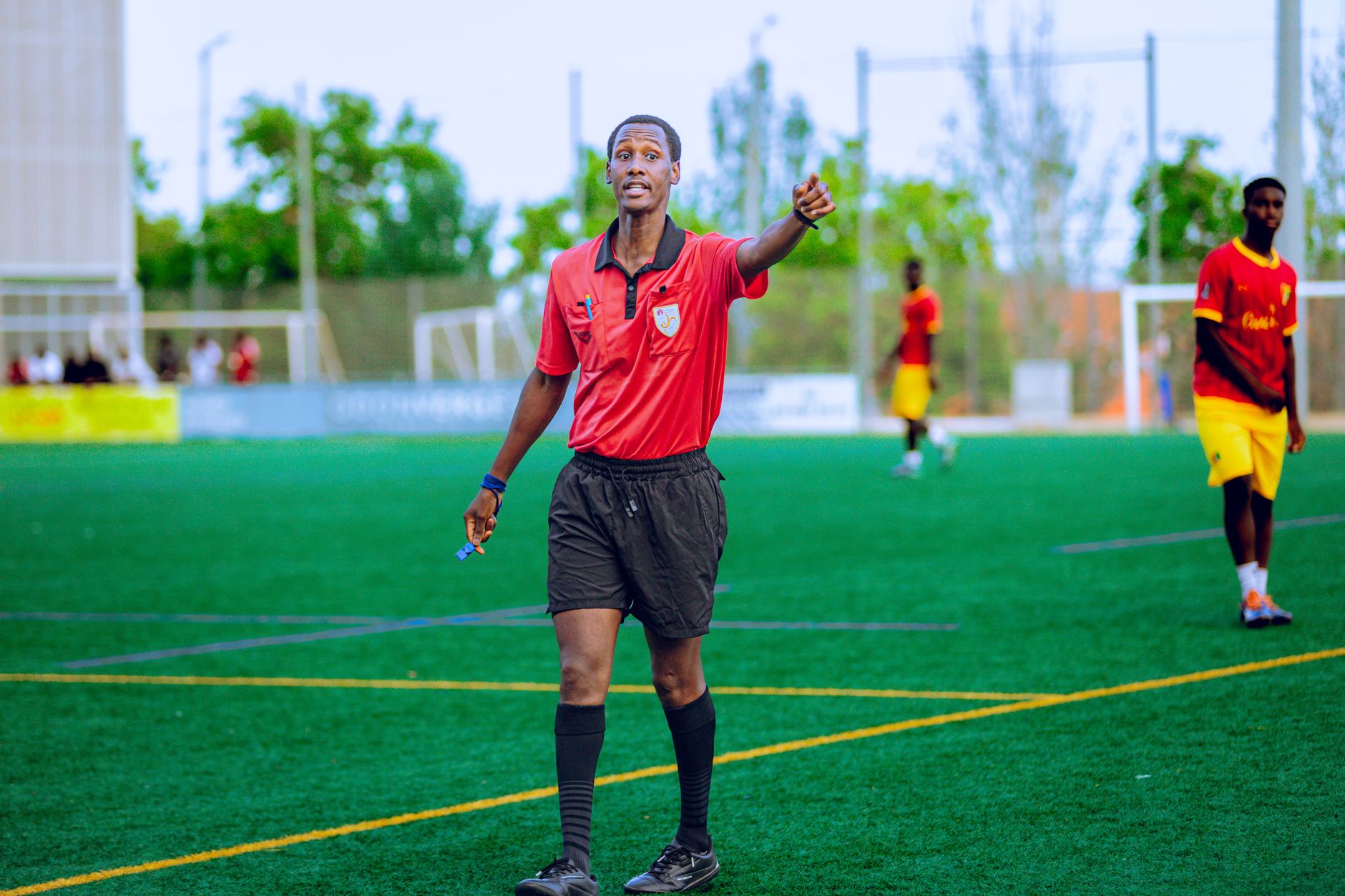
The Saturday Morning Silence
On March 29, 2026, the entire Dallas Metro Youth Basketball League cancelled 127 scheduled games. Not due to weather. Not COVID. The league simply couldn’t find enough referees to staff the courts. This wasn’t an isolated incident — it’s become the new normal across amateur sports in North America, Europe, and Australia.
The National Association of Sports Officials reported on April 2 that referee registrations have declined 32% since 2023, with the steepest drops in youth basketball (-38%), soccer (-34%), and baseball/softball (-29%). The average age of registered officials has climbed to 53 years old. Meanwhile, youth sports participation has surged 18% post-pandemic, creating a scissor crisis that’s fundamentally reshaping weekend athletics.
Why Nobody Wants to Blow the Whistle Anymore
The exodus has three accelerants that converged in 2024-2026:
Abuse escalation. SportSafe Analytics tracked 14,600 referee abuse incidents in Q1 2026 alone — parents screaming, coaches threatening, and in 83 documented cases, physical assault. Video from a March 15 U-12 soccer match in Portland showing a parent following a referee to their car went viral with 42 million views, crystallizing a problem most youth sports administrators had quietly known about for years.
The compensation hasn’t kept pace. Youth soccer referees in most US markets earn $25-$45 per game — unchanged since 2019 despite 22% cumulative inflation. For the 90 minutes of game time plus 30 minutes of commute and setup, it’s below minimum wage in 34 states.
Legal liability. After a $2.3M negligence lawsuit against an Ohio basketball referee was allowed to proceed in February 2026, several regional referee associations saw 15-20% membership drops within weeks. Referees are now being sued not just for missed calls but for “failure to maintain safe playing conditions” — a standard so vague it’s become uninsurable in some jurisdictions.
Enter the Machines
Into this vacuum, computer vision companies have rushed with a promise: AI that can officiate youth sports for a fraction of the cost and hassle.
RefVision AI, a San Jose startup that raised $34M Series B on March 22, offers a system that mounts four cameras around a basketball court, processes the footage in real-time, and calls violations with “94.2% accuracy compared to human consensus” (per their internal testing). The monthly subscription: $89 for leagues, $299 for tournament organizers who need portable setups.
Their main competitor, AutoRef Technologies (London-based, $28M funded), focuses on soccer and launched their “LineSmart” system across 340 UK youth pitches in March 2026. The system uses 6-camera arrays and calls offsides, fouls, and handballs. On April 8, they announced integration with scoreboard systems, allowing the AI to automatically update scores and game clocks.
The value proposition extends beyond just solving the referee shortage:
- Consistency. The AI doesn’t have “bad days” or unconscious biases about calling fouls differently for leading/trailing teams
- Training data. Every decision is logged, creating performance analytics for players and coaches
- De-escalation. Parents can’t yell at an algorithm (though some apparently try — RefVision’s customer support has a growing folder of videos showing parents arguing with cameras)
Early adoption numbers are startling. The Ontario Amateur Soccer Association piloted AutoRef across 45 fields in February-March 2026 and reported 78% of surveyed parents rated the experience “good” or “excellent” — higher than their satisfaction scores with human referees. The California Youth Basketball League announced on April 3 that they’re deploying RefVision to 120 gyms statewide by summer.
The Uncomfortable Questions Nobody’s Asking Yet
This technological substitution is happening so fast that the deeper implications are getting steamrolled:
Who owns the fairness algorithm? RefVision’s foul-calling model was trained on NBA and NCAA footage — games with different physicality standards than U-10 recreational leagues. When a parent in Arizona requested the training data methodology under state consumer protection laws in March, RefVision cited proprietary trade secrets. We’re outsourcing judgment about appropriate child behavior to black-box models trained on professional athlete conduct.
The officiating-to-coaching pipeline just broke. Virtually every high-level sports official started in youth leagues. If that entry point disappears, where do Olympic and professional referees come from in 2035? The International Basketball Federation issued a position paper on April 1 expressing “serious concern about referee development pathways” — then noted they’re also testing AI officiating for lower-tier international competitions.
Socioeconomic stratification is accelerating. Elite club teams still have human referees — often paying $100-150 per game for certified officials. The AI systems are being deployed in recreational leagues where families pay $200-400/season. We’re creating a two-tier system where wealthier young athletes learn to interact with human judgment and authority, while everyone else grows up with algorithmic enforcement. This pattern mirrors concerns in education (human teachers vs. AI tutors) and criminal justice (human judges vs. risk assessment algorithms).
What Happens Next
Three timeline markers to watch:
Summer 2026: The first AI-officiated game where a playoff outcome is contested in court. Legal experts expect challenges under consumer protection laws or “arbitrary and capricious” administrative standards. How judges rule will determine whether this becomes normalized or hits regulatory barriers.
Fall 2026: Major sports governing bodies (FIFA, FIBA, USA Baseball) are expected to release position papers on AI officiating in youth sports. These will likely establish minimum human oversight requirements — but enforcement mechanisms remain unclear.
2027-2028: The referee shortage will either stabilize (if pay and conditions improve dramatically) or accelerate further (if AI proves “good enough”). Current trendlines suggest the latter. RefVision’s internal projections, leaked in a March pitch deck, estimate 60% of US youth basketball and soccer games will use AI-primary officiating by 2028.
The Human Toll
Lost in the adoption metrics is this: We’re removing one of the last remaining civic roles where regular adults interact directly with community children outside their own families. Youth sports referees have historically been teachers, firefighters, retirees — people who enjoyed the contribution and the $40 gas money. They provided informal mentorship, modeled conflict resolution, and added adult presence to children’s lives.
The efficiency gains are real. The logistical solution is practical. But we should at least acknowledge we’re trading something that can’t be measured in accuracy percentages or cost-per-game metrics.
Key Takeaway
The collapse of amateur sports officiating is forcing a technological substitution that solves an immediate crisis while creating a long-term social experiment. We’re about to find out whether children need to learn that humans — flawed, inconsistent, sometimes wrong humans — hold authority, or whether growing up with algorithmic judgment is actually superior. The $340M AI officiating market isn’t just about sport. It’s a preview of how we’ll navigate human labor shortages across every sector where we’ve made the work undesirable but the function remains essential.
Key Takeaway: Youth and amateur sports face a 30% referee shortage crisis that’s forcing leagues to cancel games and raise fees. AI officiating startups are stepping in with $89/month computer vision systems that call fouls in real-time — solving logistics while raising profound questions about who gets to define fairness in sport.
Deep research published daily on AtlasSignal. Follow @AtlasSignalDesk for more.
📧 Get Daily AI & Macro Intelligence
Stay ahead of market-moving news, emerging tech, and global shifts.