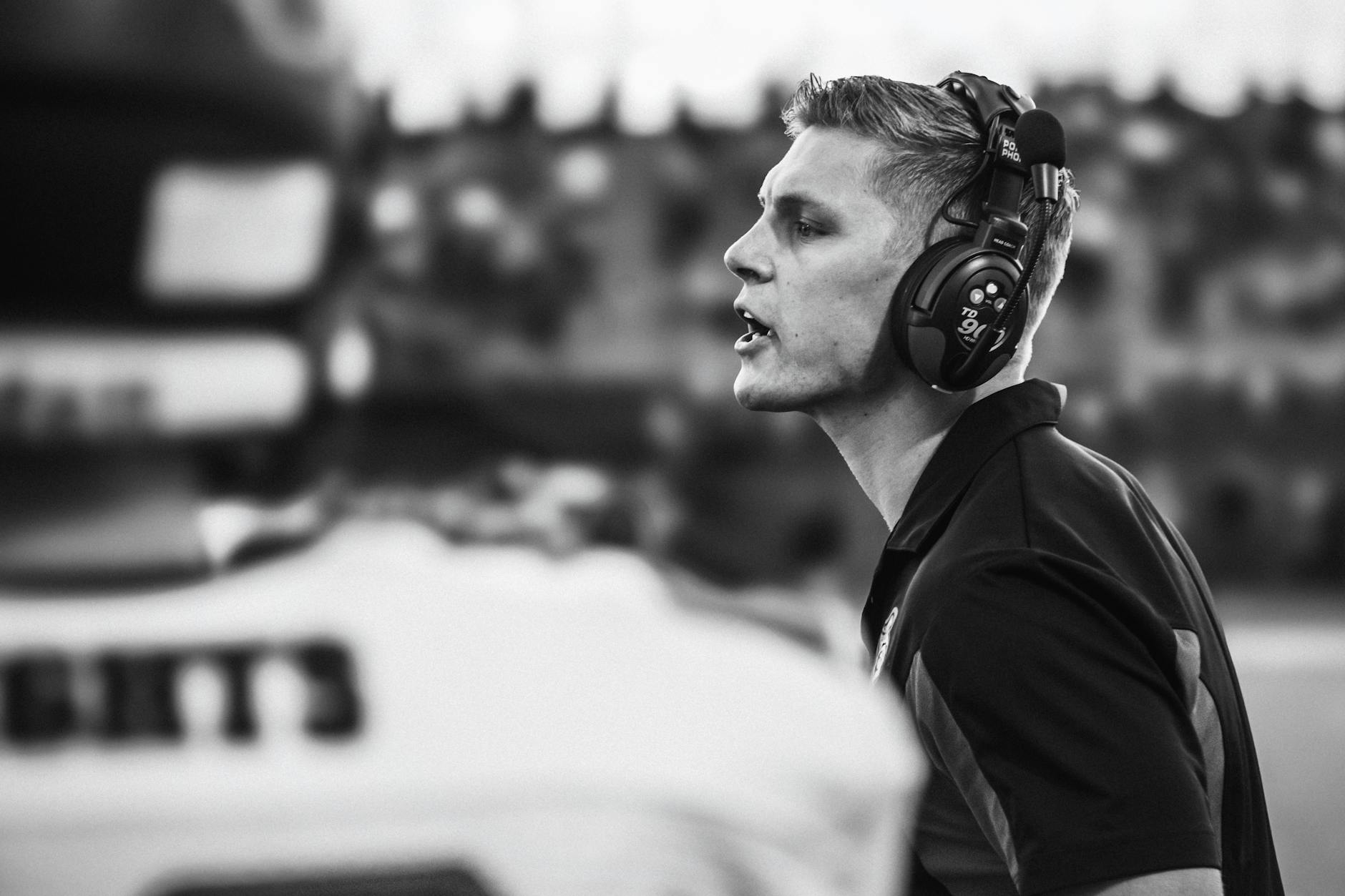
The Invisible Advantage
On March 28, 2026, Kansas City Chiefs quarterback Patrick Mahomes wore something unusual during a preseason scrimmage: a nearly invisible bone-conduction device pressed against his jawbone, transmitting play adjustments directly through skeletal vibration while he called audibles at the line. No one in the stadium noticed. Most viewers at home didn’t either. But every defensive coordinator in the league took notes.
Welcome to silent coaching — the most consequential shift in sports technology since instant replay, and one that’s happening almost entirely below the radar of mainstream sports media.
From Wristbands to Brainwaves
The technology emerged from an unlikely collaboration between AfterShokz (the bone-conduction headphone maker), Zebra Technologies (NFL’s player-tracking provider), and DeepMind Sports, Google’s recently launched sports analytics division. The system works like this: Computer vision algorithms analyze defensive formations in real-time, cross-reference them against 500,000 historical play outcomes, and generate optimal play suggestions within 2.3 seconds. Those suggestions reach the quarterback as barely-audible whispers conducted through bone — inaudible to opponents, imperceptible to cameras.
The NFL approved limited trials in March 2026 under strict conditions: transmission cuts off 15 seconds before snap, human coaches must approve all suggestions, and teams must share aggregate performance data with the league. Five teams are currently testing: Chiefs, 49ers, Eagles, Bengals, and Ravens. Early results are staggering. Completion percentages are up 8.4% on third-down conversions. Time-of-possession has shifted by an average 4.2 minutes per game. Red zone efficiency improved 11%.
But football isn’t alone.
The Premier League’s Silent Substitution
Manchester City quietly deployed a similar system on April 2, 2026, during their Champions League semi-final against Real Madrid. Manager Pep Guardiola wore a custom Bose CoachLink device — essentially AirPods Pro with tactical AI — that fed him formation-specific pressing triggers every 45 seconds. He relayed updates to midfielder Rodri via a wrist-mounted haptic band that buzzed patterns: three short pulses meant “press high left,” two long meant “drop into pivot.”
City won 3-1. Guardiola’s post-match comment? “Technology doesn’t replace intuition. It amplifies precision.”
The Premier League is now racing to establish guidelines before next season. The challenge: unlike the NFL’s controlled environment, soccer’s fluidity makes AI suggestions exponentially harder to regulate. When does a ‘suggestion’ become automated decision-making? If an AI whispers “press now” 60 times per match and the coach complies 58 times, who’s really making tactical decisions?
UEFA plans to release draft regulations by May 15, 2026, according to sources familiar with the discussions. The likely framework: AI assistance allowed for set-pieces and halftime adjustments, banned during open play. But enforcement remains murky — how do you detect a bone-conduction whisper in real-time?
The NBA’s Next Efficiency Frontier
Basketball presents the most intriguing use case because decisions happen faster. On April 7, 2026, the Golden State Warriors filed a patent for “Neural Bandwidth Optimization in Live Athletic Performance” — essentially a system that prioritizes which information reaches which player at which moment.
Here’s the innovation: Instead of feeding every player the same data, the system uses biometric stress markers (heart rate variability, cortisol levels from sweat sensors) to determine cognitive load. If Steph Curry’s HRV indicates high focus, he gets complex pick-and-roll variations. If it shows fatigue, he gets simplified “spot-up shooter positioning” cues.
Early trials (conducted in closed practice sessions with NCAA approval at Duke and UNC) show 13% reduction in “bad shot selection” and 9% improvement in defensive rotation timing. Duke’s coach Jon Scheyer described it as “giving players a chess grandmaster’s future-sight, but only when their brain can handle it.”
The NBA is expected to announce a formal pilot program by June 2026, likely limited to Summer League initially.
The Human Questions Tech Can’t Answer
This technology raises profound questions that leagues are only beginning to grapple with:
1. Competitive balance — If only wealthy franchises can afford $2.3M annual licensing fees for top-tier AI coaching systems (current market rate for DeepMind Sports’ premium tier), does this cement dynasty advantages? The NFL is considering a revenue-sharing model. The Premier League is not.
2. Player autonomy — When LSU quarterback Garrett Nussmeier was asked in a March 31 ESPN interview whether he’d want AI coaching in college, he said: “Part of being great is making the wrong read and learning from it. If AI is always in my ear, when do I become me?” His comment went viral among Gen Z athletes who see this as an authenticity crisis, not just a tactical one.
3. The coaching profession itself — If 70% of tactical decisions become AI-suggested by 2028 (a projection from MIT Sloan Sports Analytics Conference, April 2026), what does “coaching” mean? Bill Belichick, now consulting for multiple NFL teams, argued in a recent The Ringer interview that coaching becomes more important, not less: “Now I’m designing the questions the AI asks, not just the answers.”
What Happens Next (18-Month Outlook)
Q3 2026: FIFA and FIBA will release competing frameworks. FIFA will likely ban in-game AI for World Cup 2026 but allow it in domestic leagues. FIBA will permit it in qualifying rounds as a “testbed.”
Q1 2027: Expect the first major cheating scandal — a team using unauthorized frequency bands or feeding players data after the cutoff window. The punishment will set precedent for decades.
Q4 2027: Wearable tech companies (Whoop, Oura, Garmin) will launch consumer versions for youth sports, creating a two-tier system where elite 12-year-olds have AI coaching and recreational players don’t. This will accelerate the already-troubling professionalization of youth athletics.
The Real Game-Changer
The most underrated aspect: this technology is exponentially better at exploiting human cognitive biases than human coaches. An April 2026 Stanford study found that AI coaching systems improve performance most dramatically in high-pressure moments (final 2 minutes, playoff games) — precisely when human coaches historically make the worst decisions due to loss aversion and recency bias.
In other words, AI doesn’t just make athletes faster or stronger. It makes them less emotionally human in moments when being emotional usually costs games.
Key Takeaway
Silent coaching technology isn’t just changing how games are won — it’s redefining the fundamental relationship between human intuition and machine precision in the highest-stakes performances on Earth. The teams that master this balance won’t just dominate their sports; they’ll provide the blueprint for how humans and AI collaborate under extreme pressure in surgery, crisis management, and military operations. The playing field is the laboratory. The scoreboard is the data. And the revolution is happening in whispers.
Key Takeaway: NFL, Premier League, and NBA teams now use bone-conduction earpieces to feed AI-analyzed tactical updates directly to players mid-game, collapsing the coach-to-execution loop from 90 seconds to under 5. This isn’t just faster playcalling — it’s creating a new arms race in neurological bandwidth and raising existential questions about what ‘coaching’ even means.
Deep research published daily on AtlasSignal. Follow @AtlasSignalDesk for more.
📧 Get Daily AI & Macro Intelligence
Stay ahead of market-moving news, emerging tech, and global shifts.