The Geography of Industrial Intent
When a sitting Indian Prime Minister makes his first bilateral visit to Slovakia in the entire history of Indo-Slovak relations, the natural question isn’t why now—it’s why ever. Slovakia’s $115B economy ranks 61st globally, smaller than Bangladesh. It has no diaspora leverage, no tech unicorns India covets, no critical rare earth deposits.
Yet Modi spent June 17-18 in Bratislava before his marquee Paris engagements, meeting PM Robert Fico and visiting a Jaguar Land Rover plant. The itinerary reads like misdirection until you examine Slovakia’s industrial base through a defense procurement lens.
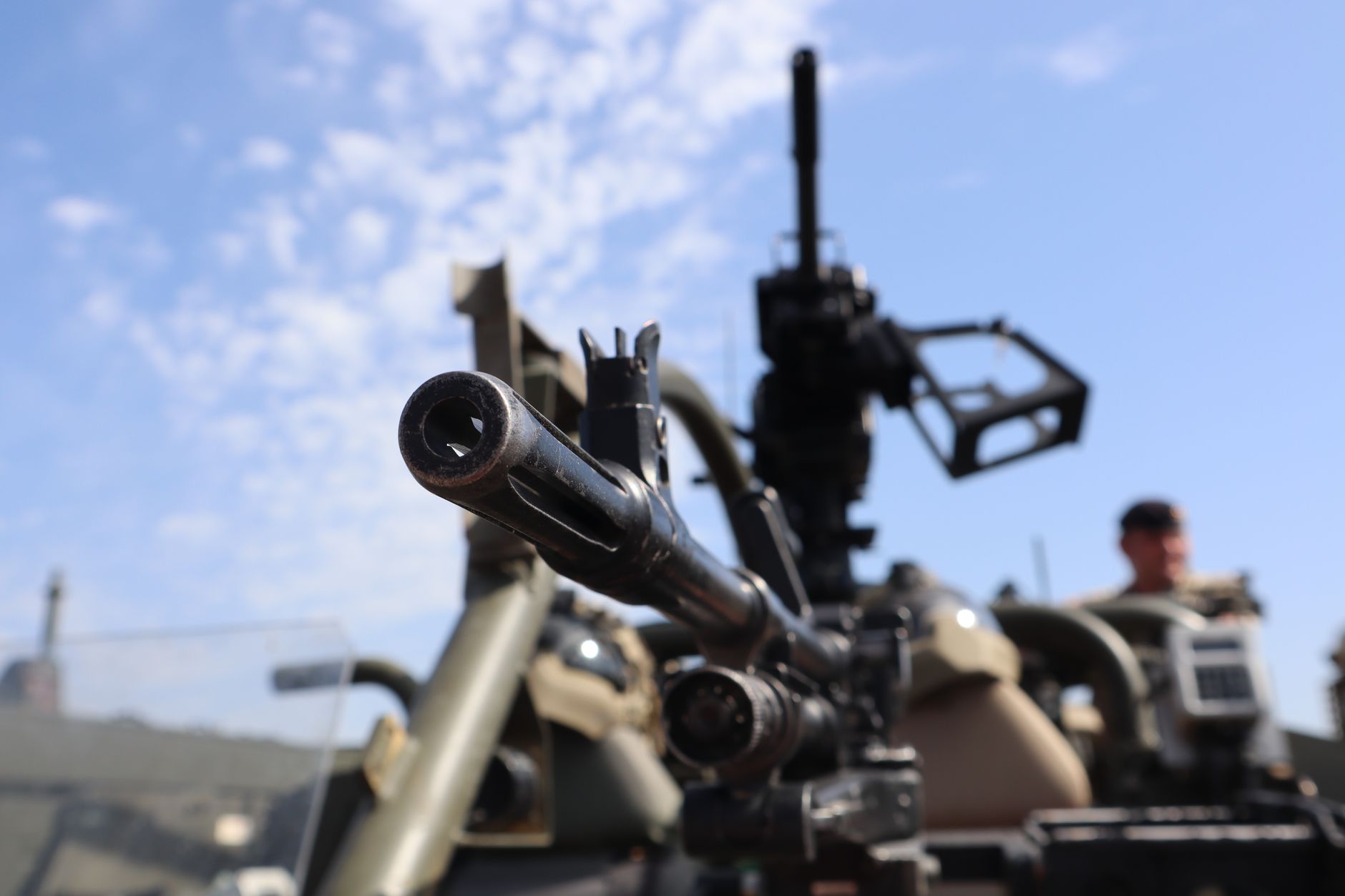
Slovakia is Europe’s silent arsenal. The country produces 40% of the EU’s infantry fighting vehicles, houses Konstrukta Defence (maker of the Zuzana 2 self-propelled howitzer used in Ukraine), and operates ZTS-Špeciál, which manufactures T-72 tank components that India still fields by the thousands. More critically, Slovakia’s defense contractors operate outside the strict export control frameworks that bind France, Germany, and the UK.
India’s defense modernization requires $130B in procurement through 2030. The problem: Western Europe offers finished systems with minimal tech transfer. Russia, India’s traditional supplier, is consumed by Ukraine and unreliable. China is obviously off the table. Slovakia—and by extension, the Visegrád Four (Poland, Czech Republic, Hungary, Slovakia)—represents the Goldilocks tier: sophisticated enough for dual-use tech, desperate enough for export revenue to negotiate genuine co-production deals.
The Timing Tells the Strategy
This visit didn’t happen in isolation. Three data points from the last 72 hours create the pattern:
1. France announced $6.2B in Rafale maintenance contracts (June 18) during Modi’s Paris leg, but these are sustainment deals, not new platforms. India already operates 36 Rafales; France won’t release source codes or let HAL (Hindustan Aeronautics Limited) manufacture critical avionics domestically. The real industrial ask—naval jet engine tech for India’s indigenous carrier aircraft—remains stonewalled by Safran.
2. Slovakia’s Konštrukta just won a $380M Indian Army tender (announced June 16, two days before Modi’s arrival) to upgrade 500 BMP-2 infantry fighting vehicles with Slovak fire control systems. This wasn’t coincidence; it was the opening bid made public to justify the visit.
3. The EU passed new dual-use export restrictions (June 14) tightening controls on semiconductor manufacturing equipment and AI-capable drone components to non-NATO countries. India, despite Quad membership, isn’t NATO. Slovakia, as an EU member, is technically bound by these rules but has historically interpreted them… creatively.
Connect the dots: Modi went to Paris for the optics and the fighter jet service contracts. He went to Bratislava for the machine tools, vehicle electronics, and artillery fire control systems that Slovakia can export without triggering Brussels’ compliance apparatus—at least not immediately.
The Central European Arbitrage
India isn’t the first to exploit this regulatory arbitrage. Between 2014-2022, Slovakia exported $1.8B in “civilian” vehicle components to Turkey, which promptly integrated them into Bayraktar drones and armored personnel carriers. The EU lodged complaints; Slovakia paid fines totaling $40M—a 2.2% transaction cost on an $1.8B revenue stream.
For India, the calculus is even cleaner. The “Make in India” defense initiative requires 70% domestic content for military procurement by 2028. But “domestic content” is a malleable concept when you’re importing CNC machining centers from ZTS Martin (Slovak precision toolmaker) to manufacture components in Uttar Pradesh. The transmission is Indian-made; never mind that the tooling, jigs, and CAD files came from Bratislava.
Three concrete outcomes likely in the next 6-18 months:
-
Joint venture announcement by Q3 2026 between Bharat Forge (India’s largest private defense manufacturer) and Konštrukta Defence to produce 155mm artillery barrels in Pune. Slovakia supplies metallurgy expertise and heat treatment tech; India provides scale manufacturing and a guaranteed $2B domestic order book.
-
Slovakia becomes India’s Central European semiconductor assembly hub by mid-2027. India’s chip fabrication ambitions (the $10B incentive program announced in 2021) have stalled on lithography equipment export controls. Slovakia can legally sell India back-end packaging and testing equipment that falls into a regulatory grey zone. Watch for Tata Electronics or Adani to announce a “technical collaboration center” in Košice.
-
Poland and Czech Republic follow the template by Q1 2027. Poland’s PGZ (state defense conglomerate) already produces reactive armor and Poland has 240+ Rosomak APCs India could reverse-engineer. Czech Republic’s Aero Vodochody could partner on India’s struggling AMCA (Advanced Medium Combat Aircraft) program—not for airframe tech, but for composite manufacturing processes that don’t trigger IP restrictions the way a joint venture with Lockheed Martin would.
The Risks Europe Isn’t Pricing
Brussels tolerates this now because Central Europe needs export markets and India isn’t (yet) rearming for confrontation with a NATO member. That calculus breaks the moment India uses Slovak-sourced tech in a border clash with Pakistan—a nuclear-armed state with Turkish drones, Chinese missiles, and a habit of attracting CNN cameras.
The second-order risk: China is watching this playbook. If India can access European defense tech through the Bratislava backdoor, so can Turkey (already happening), so can Saudi Arabia (in negotiation), and eventually, so can Chinese shell companies operating through Serbian or Hungarian intermediaries. The EU’s dual-use export regime only works if small member states enforce it. Slovakia’s $115B economy can’t turn down $5-8B in annual defense exports for the sake of regulatory purity.
What This Means for US-India Defense Ties
The Pentagon offered India co-production on GE F404 jet engines in 2023. Two years later, the deal remains unsigned because GE won’t transfer single-crystal turbine blade manufacturing tech—the crown jewel. Meanwhile, Slovakia’s Považské Strojárne can sell India the vacuum arc remelting furnaces and directional solidification equipment needed to develop that capability independently. It’s slower, messier, but it’s sovereign.
This is the strategic wedge. The US wants India as a Quad partner and counterweight to China, but only if India buys American platforms with American dependency built in. India wants the industrial base, not just the weapons. Central Europe is the compromise geography that gives India the tooling without the strategic strings.
Key Takeaway
Modi’s Slovakia visit isn’t a diplomatic curiosity—it’s the blueprint for how middle powers acquire defense manufacturing capacity in an era of tightening export controls. By cultivating smaller European partners with advanced industrial bases and flexible regulatory interpretations, India is building a sovereign defense supply chain that Western allies won’t provide and Russia can’t anymore. If this works, expect Brazil, Indonesia, and even Saudi Arabia to follow the template. The era of neat alliance blocs controlling military tech diffusion is ending; the era of industrial arbitrage through second-tier partners is beginning. Slovakia just became the test case.
Key Takeaway: Modi’s first bilateral visit to Slovakia in 75 years isn’t diplomatic pageantry—it’s industrial strategy. Slovakia manufactures 40% of Europe’s armored vehicles and has become India’s backdoor to defense tech transfer that Western Europe won’t provide directly. This visit crystallizes India’s post-Ukraine playbook: secure dual-use manufacturing partnerships in Central Europe while Western allies are distracted.
Source Signals
- PM Modi departs for New Delhi after concluding two-nation visit to France, Slovakia
- Debutant Davies lives his dream on banner day for Australia’s spinners
- Ben Stokes set to play for Durham as England investigation continues
Deep research published daily on AtlasSignal. Follow @AtlasSignalDesk for more.
This report was produced with AI-assisted research and drafting, curated and reviewed under AtlasSignal’s editorial standards. For corrections or feedback, contact atlassignal.ai@gmail.com.